What Happens in the Reaction of Hydrochloric Acid and Potassium Hydroxide: Salts, SDS & Molecule Insight
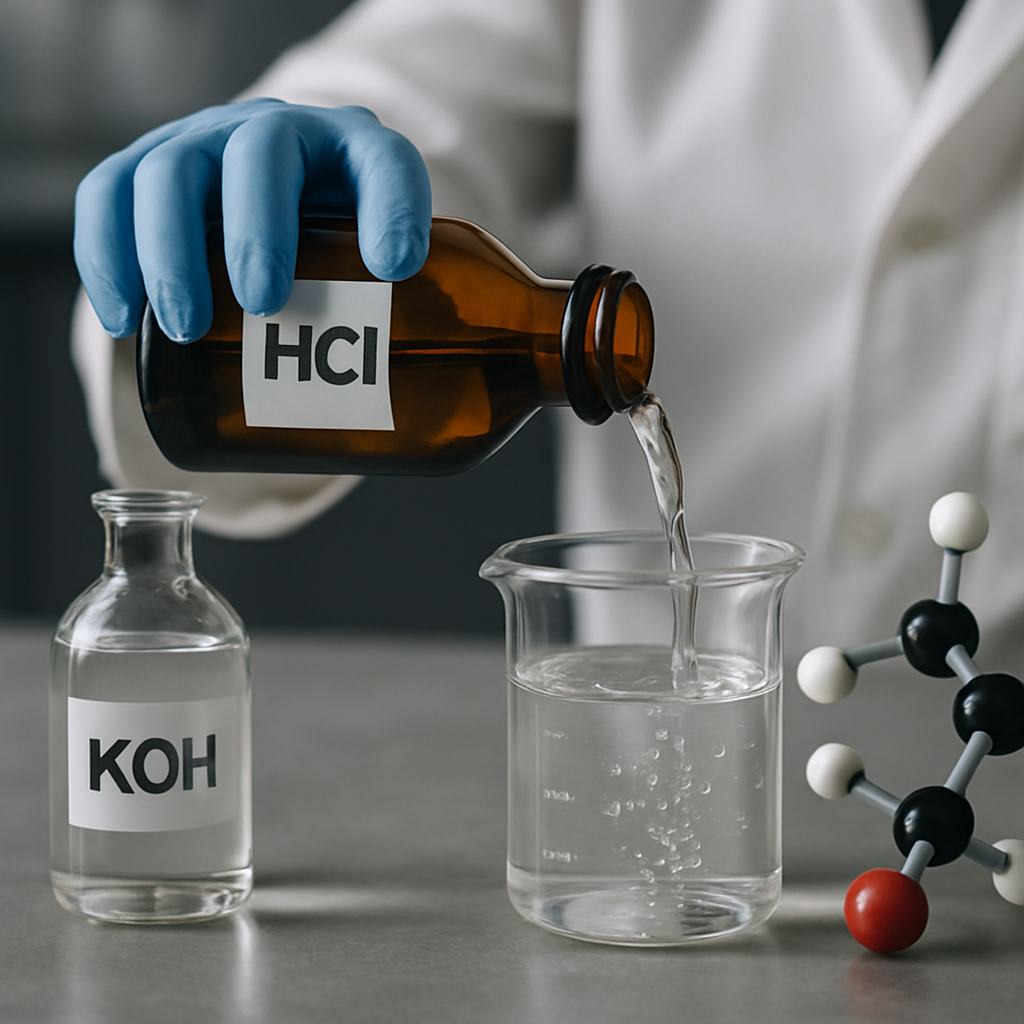
The reaction between hydrochloric acid and potassium hydroxide is a straightforward and classic demonstration of acid-base chemistry. When these two substances mix, they undergo a complete neutralization reaction, forming potassium chloride (a type of salt) and water as the primary products. This process has important implications for laboratory safety (as referenced in SDS documentation), understanding molecular behavior in solution, and its relevance to mineral and bulk chemical applications in industry and research.
The Nature of the Hydrochloric Acid and Potassium Hydroxide Reaction
When hydrochloric acid (HCl) reacts with potassium hydroxide (KOH), the result is a neutralization reaction. This is a hallmark example of a strong acid meeting a strong base, described by the equation:
- KOH + HCl → KCl + H2O
This formula illustrates how potassium ion and chloride ion combine to yield potassium chloride, while the remaining hydrogen and hydroxide ions create water. The efficiency and completeness of this reaction make it a benchmark in titration, educational science experiments, and industrial bulk synthesis requiring highly predictable outcomes. Direct confirmation of this classic chemical equation can be found in MEL Science's chemistry overview.
Importantly, both reactants must be handled carefully, as potassium hydroxide is a caustic alkali and hydrochloric acid is highly corrosive. This fundamental chemistry underlies numerous manufacturing and purification processes where precise control of pH and salt content is essential.
Potassium Salts: Molecular Structures and Bulk Applications
The potassium chloride produced through this reaction is an essential molecule in multiple contexts. It is widely used as a mineral supplement, fertilizer ingredient (featured in some bioag bulk products), and as a reference substance in laboratory calibrations. The crystalline structure of potassium chloride is made up of alternating potassium and chloride ions in a solid ionic lattice, which accounts for its high solubility and stability in aqueous solutions.
This reaction pathway is not limited to hydrochloric acid and potassium hydroxide. Similar neutralization reactions occur with other acids and bases, leading to the formation of different potassium salts such as potassium sulfate (when sulfuric acid is used) or potassium nitrate (when nitric acid is involved). The consistency of this response across different mineral acids is a major reason potassium salts are so valuable in bulk chemical and agriculture markets.
Modern production often relies on these reactions for generating hundreds to thousands of kilograms of fertilizer-quality salts, underscoring the commercial relevance of this classic laboratory demonstration. More details about potassium hydroxide's industrial handling and applications can be found at The Chlorine Institute.
SDS and Laboratory Safety Considerations
Both hydrochloric acid and potassium hydroxide require rigorous observance of SDS (Safety Data Sheet) guidelines. These materials pose significant hazards in concentrated form; hydrochloric acid can cause severe respiratory and skin burns, while potassium hydroxide is highly corrosive and can result in permanent eye and skin damage. Mixing solutions of these reagents must always be conducted with appropriate PPE, chemical-resistant labware, and proper ventilation present.
When preparing standard solutions or performing titrations, accurate dosage calculations must follow both the stoichiometry of the neutralization reaction and the safe handling recommendations found in their respective SDSs. Quick addition and rapid dilution minimize the chances of localized heat spikes or splattering, both of which could worsen exposure risks.
In the industrial arena, automated dosing and advanced bulk storage systems mitigate the dangers associated with large-scale handling, further reducing risk and improving efficiency in continuous processes.
SDS protocols extend to proper spill response, neutralization of excess reagents, and safe disposal procedures. These steps help prevent environmental contamination and safeguard both laboratory and production personnel, reinforcing why strict adherence to safety guidelines is mandatory for all settings.
Broader Implications: Minerals, Dosage, and Related Reactions
The molecular simplicity of the KOH and HCl reaction belies its importance in mineral nutrition and dosage science. Potassium, a vital dietary mineral, is most often supplied as potassium chloride in medical and nutritional supplements. Both the dosage and safe administration of potassium salts are rooted in this reliable synthesis pathway, ensuring consistency in pharmaceuticals and food fortification products.
This reaction also bridges different domains: in bulk fertilizer production, large-scale neutralizations yield potassium salts for crop nutrition; in water treatment, potassium chloride can help regenerate certain filtration media. The ability to precisely control the quantity and molecular purity of the resulting salt is essential for these diverse applications.
Meanwhile, the underlying chemical principles of acid-base neutralization in this system are echoed in related reactions with sulfuric or nitric acids, producing potassium sulfate or potassium nitrate, respectively. These reactions, like the one examined here, convert potentially hazardous reagents into stable, useful compounds for agriculture and industry.
Understanding the structural transformations and safety protocols in this common but powerful reaction offers insight into many aspects of modern chemistry and minerals science.
Summary of Key Insights and Industry Practice
The neutralization reaction between hydrochloric acid and potassium hydroxide is foundational in both theoretical and practical chemistry. Not only does it yield potassium chloride—a molecule with wide-ranging uses in nutrition, agriculture, and chemical engineering—but it also sets the standard for safe laboratory and industrial practice based on established SDS guidelines. This well-characterized process allows for precise control of product dosage and purity, supporting a variety of applications from mineral supplementation to bulk fertilizer production. For further technical detail on potassium hydroxide, its properties, and handling recommendations, see the resources at MEL Science and The Chlorine Institute.

Comments
Post a Comment